

Beyond Pads: A 2026 View
Remember when period care meant a trip to the drugstore for a box of pads? It feels like a lifetime ago, doesn't it? For generations, that was the default, but a growing number of us are questioning that routine. There's a real dissatisfaction brewing with the waste, the discomfort, and frankly, the expense of disposable period products. We're looking for better, and thankfully, the options have exploded in recent years.
2026 finds us at a fascinating point in menstrual care. Sustainable alternatives aren’t a niche trend anymore; they’re becoming mainstream. Menstrual cups and period underwear are leading the charge, and both have undergone significant advancements. We’ve moved beyond basic silicone and cotton. New materials are being explored, designs are becoming more intuitive, and overall, the user experience is improving.
The sophistication of both products is notable. Early menstrual cups could be tricky to insert, and period underwear sometimes felt bulky. Those issues are largely being addressed through innovative engineering and material science. We're seeing cups with patented pull-tabs for easier removal, like those from Flex, and underwear with incredibly absorbent, breathable fabrics. This isn’t your grandmother’s period care.
This article will break down the key differences between menstrual cups and period underwear, helping you determine which option – or combination of options – best aligns with your lifestyle and needs. It's about finding what works for you, and understanding the nuances of each choice in a rapidly evolving market.
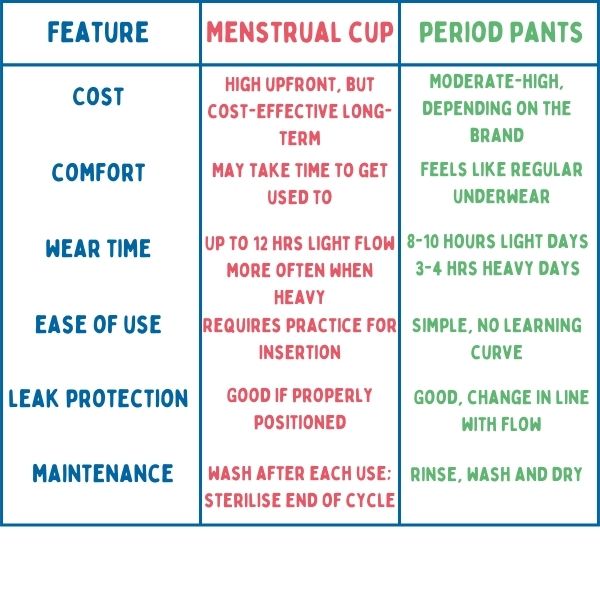
Menstrual Cups: The Tech Evolves
Menstrual cups work by creating a seal against the vaginal walls, collecting menstrual fluid rather than absorbing it. It's a simple concept, but the execution has become remarkably refined. The core principle remains the same – suction – but the materials and designs are constantly being improved. Early cups were often made from fairly rigid silicone; now, medical-grade silicone is the standard, offering greater flexibility and comfort.
One of the biggest advancements has been in addressing insertion and removal concerns. Many users initially struggle with this, but companies like Saalt are actively working to simplify the process. Cup shapes have diversified. The traditional bell shape is still popular, but V-shapes and other ergonomic designs are becoming more common, aiming for a more comfortable and secure fit. Finding the right size is also crucial, and brands now offer more detailed sizing guides.
Durability is a major selling point. A well-maintained menstrual cup, according to Saalt.com, can last up to 10 years. That’s a significant cost saving over time. They can also be worn for up to 12 hours, making them ideal for busy days or overnight use. However, it's important to note that this depends on your flow—emptying more frequently is always advisable.
Beyond the standard cup, disc-shaped menstrual cups are gaining traction. These sit higher in the vaginal canal and distribute fluid around the cervix, potentially offering even greater capacity and reducing the need for frequent emptying. They can be a good option for people with heavier flows or those who find traditional cups uncomfortable. However, removal can sometimes be a bit messier.
Concerns about discomfort are valid, but often stem from improper sizing or insertion technique. Taking the time to learn how to properly insert and remove a cup is essential. Some users experience suction issues, which can cause discomfort, but this can usually be resolved by adjusting the cup’s position or trying a different fold.
Cleaning is another area where technology has helped. Self-sterilizing cups are emerging, and many brands offer convenient cleaning solutions. However, regular washing with mild soap and water is still the recommended practice. It's also important to properly store your cup between cycles.
Period Underwear: Beyond Leak Protection
Period underwear has come a long way from the early, bulky prototypes. Now, it’s often indistinguishable from regular underwear in terms of look and feel. The key is the layered construction. Typically, you'll find a moisture-wicking top layer, an absorbent core, and a leak-proof outer layer. These layers work together to provide protection and comfort.
The range of absorbency levels is impressive. You can find underwear designed for light spotting, moderate flow, or even heavy bleeding. Brands clearly label the absorbency, often using terms like 'light,' 'regular,' 'heavy,' and 'super.' Understanding your flow is key to choosing the right level of protection. Some brands even offer underwear with different absorbency levels in different parts of the garment.
Fabric technology is at the heart of the advancements in period underwear. Companies are using innovative materials to improve odor control, enhance quick-drying capabilities, and increase overall comfort. Microfiber blends are common, offering a soft and breathable feel. Some brands are also incorporating organic cotton into their designs.
Style options are plentiful. You can find period underwear in a variety of styles, including bikini, boyshort, brief, and high-waisted cuts. This allows you to choose underwear that suits your body type and personal preferences. It's no longer a compromise between protection and style; you can have both.
Price points vary considerably. You can find basic period underwear for around $20-$30 per pair, while more advanced options with higher absorbency and premium materials can cost $40 or more. It's important to factor in the cost of replacing underwear over time, as the absorbent layers will eventually lose their effectiveness.
Washing and care routines are relatively straightforward. Most brands recommend rinsing the underwear in cold water before washing it in the washing machine. Avoid using fabric softeners or bleach, as these can damage the absorbent layers. Air drying is often recommended.
Featured Products

Absorbent menstrual underwear · Holds up to 12 tampons* · All-day wear
This option offers high absorbency for all-day protection and is designed for comfort with a high-waist fit.

Comfortable modal fabric · Bikini cheeky brief style · OEKO-TEX STANDARD 100 certified
These period underwear are made from soft, breathable modal fabric and come in a popular bikini style, certified for safety.

Super leakproof design · No-show bikini style · Suitable for heavy flow and incontinence
Designed for maximum protection, these no-show bikini underwear are ideal for heavy flow days and can also be used for incontinence.

Disposable overnight underwear · 360° coverage · Designed for worry-free nights
These disposable overnight underwear provide comprehensive coverage for maximum protection during sleep.

Disposable underwear · Organic cotton cover · Maximum coverage
These disposable underwear feature an organic cotton cover and offer maximum coverage, suitable for periods, postpartum, and incontinence.
As an Amazon Associate I earn from qualifying purchases. Prices may vary.
Cost Breakdown: Long-Term Savings
Let's talk numbers. Over a 5-year period, the cost of period care can add up significantly. To illustrate, let's consider a hypothetical user with a moderate flow.
For menstrual cups, the initial investment is around $25-$40 (Saalt cups are around $35). Assuming a 10-year lifespan, the cost over 5 years is roughly $17.50-$20, plus the cost of cleaning supplies (around $10 per year, totaling $50). Total: $67.50-$70.
Now, let's look at period underwear. A basic set of 5 pairs, costing $30 each, totals $150. Given that the absorbency will likely degrade over 5 years, you may need to replace the set once or twice, adding another $150-$300. Total: $300-$450.
For a heavier flow, the cost of period underwear increases substantially. You might need to purchase more pairs or opt for higher-absorbency options, driving up the total cost. A menstrual cup, in this scenario, remains a relatively consistent expense.
It's crucial to remember these are estimates. Individual costs will vary depending on brand choices, flow volume, and replacement frequency. However, the general trend is clear: menstrual cups offer significant long-term savings compared to period underwear, especially for those with moderate to heavy flows.
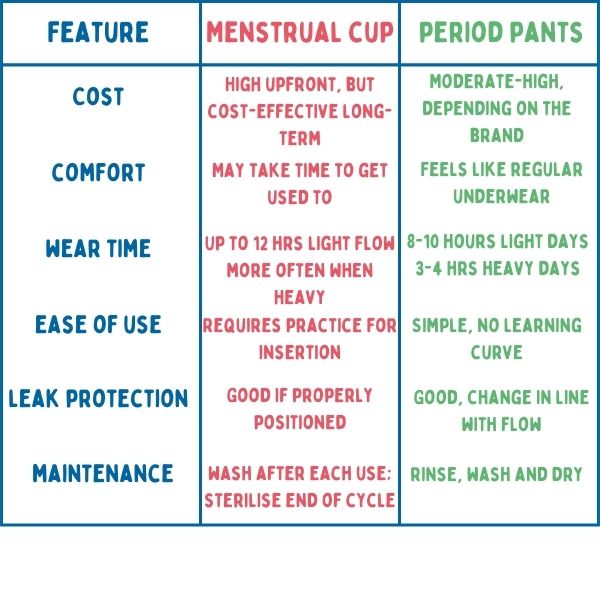
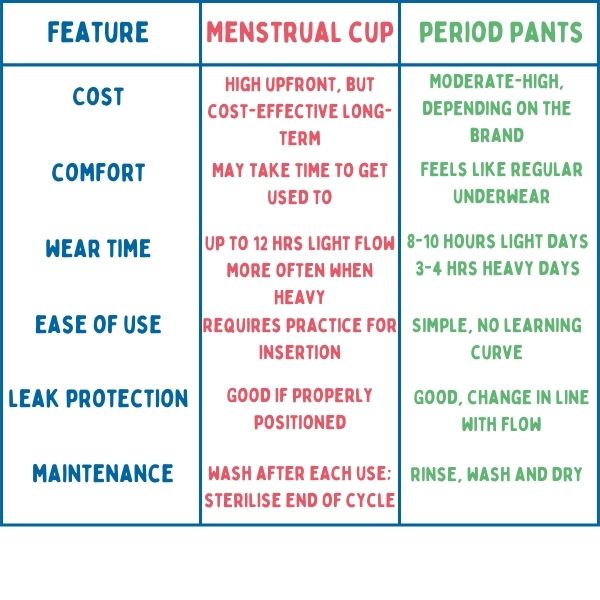
Menstrual Cup vs. Period Underwear: A Comparison (2026)
| Feature | Menstrual Cup | Period Underwear |
|---|---|---|
| Cost | Medium (Initial investment higher, long-term savings) | Medium (Ongoing purchase of multiple pairs needed) |
| Convenience | Medium (Learning curve for insertion/removal, requires cleaning) | High (Similar to regular underwear, easy to use) |
| Environmental Impact | High (Reusable for up to 10 years with proper care) | Medium (Reduces disposable pad/tampon waste, but fabric production has an impact) |
| Comfort | Medium to High (Once properly fitted, many users report no sensation; some discomfort during insertion/removal) | High (Feels like regular underwear, dependent on fabric and style) |
| Flow Level Suitability | Wide Range (Available in different sizes and can accommodate light to heavy flows) | Variable (Absorbency levels vary significantly between brands and styles; options available for most flows) |
| Maintenance | Medium (Requires rinsing and sterilizing between cycles) | Medium (Requires rinsing before washing, following care instructions) |
| Travel Friendliness | High (Compact and reusable) | Medium (Requires carrying used underwear until washing is possible) |
Illustrative comparison based on the article research brief. Verify current pricing, limits, and product details in the official docs before relying on it.
Lifestyle Fit: Which One Suits You?
The 'best' option isn't universal—it depends on your lifestyle. For active individuals, both menstrual cups and period underwear can be excellent choices. Period underwear offers a seamless experience during sports and exercise, providing reliable protection without the feeling of wearing anything different. However, some users prefer the security of a menstrual cup during high-impact activities.
Travel presents unique considerations. Menstrual cups are generally more convenient for travel, as you only need one cup and don’t have to worry about carrying around multiple pairs of underwear. Access to clean water for rinsing is a factor, though. Period underwear requires carrying enough pairs to last your trip, and finding laundry facilities.
Sleep comfort is another important factor. Many people find period underwear more comfortable to wear overnight, as it feels more like regular underwear. However, a properly fitted menstrual cup can be worn for up to 12 hours, eliminating the need for overnight changes.
A common anxiety around menstrual cups is the learning curve. It takes practice to master insertion and removal, and some people may experience discomfort initially. Period underwear, on the other hand, is generally easier to use from the start. But, some people feel self-conscious about potential leaks with underwear, even though modern options are very reliable.
Many people find that a combination approach works best. Using a menstrual cup for heavy flow days and period underwear for lighter days can provide the best of both worlds. This allows you to tailor your period care to your individual needs and preferences.
Menstrual Cup or Period Underwear: Find Your Perfect Sustainable Period Companion
Choosing between a menstrual cup and period underwear can feel overwhelming! Both are fantastic sustainable options, but the best choice for *you* depends on your lifestyle and preferences. This quick quiz will help narrow down which one might be the perfect fit.
Health Considerations: What the Experts Say
Proper hygiene is paramount with both menstrual cups and period underwear. With menstrual cups, thorough cleaning is essential to prevent bacterial growth and infections. This includes washing the cup with mild soap and water after each use and sterilizing it between cycles. According to health.clevelandclinic.org, menstrual cups are generally safe when used correctly.
Concerns about Toxic Shock Syndrome (TSS) are often raised with menstrual cups, but the risk is very low when proper hygiene is maintained. TSS is more commonly associated with tampon use. Emptying the cup frequently and avoiding prolonged use can further minimize the risk.
With period underwear, it’s important to wash the underwear thoroughly after each use to prevent odor and bacterial growth. Choosing underwear made from breathable materials, like organic cotton, can also help reduce the risk of irritation.
Some individuals may experience allergic reactions or irritation from the materials used in period underwear. If you have sensitive skin, look for underwear made from hypoallergenic materials. It's always a good idea to test a new product on a small area of skin before wearing it for an extended period.
Disclaimer: This information is not intended to be a substitute for professional medical advice. Always consult with a healthcare provider if you have any concerns about your menstrual health.
Sustainability: A Deeper Dive
Both menstrual cups and period underwear are significantly more sustainable than disposable pads and tampons. Disposable products generate a massive amount of waste, contributing to landfill pollution and environmental degradation. Switching to a reusable option is a powerful step towards reducing your environmental impact.
Menstrual cups are typically made from medical-grade silicone, a durable and recyclable material. However, the recycling process for silicone can be complex and isn’t widely available in all areas. The long lifespan of a cup – up to 10 years – minimizes the need for frequent replacements.
Period underwear presents a more nuanced sustainability picture. While it reduces waste compared to disposable products, the manufacturing process can have environmental consequences. Many period underwear brands use synthetic fabrics, which are derived from fossil fuels and can contribute to microplastic pollution.
Microplastic shedding is a growing concern. When synthetic fabrics are washed, tiny plastic particles are released into the water supply. This can harm aquatic life and potentially enter the human food chain. Choosing underwear made from natural fibers, like organic cotton, can help minimize this issue.
End-of-life options are also important. While menstrual cups can be recycled (though it's not always easy), period underwear typically ends up in landfills. Some brands are exploring take-back programs or using biodegradable materials, but these initiatives are still in their early stages.
Ultimately, 'sustainable' is a complex term. Both menstrual cups and period underwear have their environmental trade-offs. Brand transparency and ethical manufacturing practices are crucial considerations when making a purchasing decision. Look for brands that are committed to reducing their environmental impact and providing fair labor conditions.
When considering sustainable period care in 2026, which option best aligns with your daily lifestyle and comfort needs?
Your feedback helps our community understand the evolving preferences for eco-friendly menstrual health solutions. Vote below!
No comments yet. Be the first to share your thoughts!