
Match absorbency to your flow
Choosing the right period swimwear starts with being honest about your typical flow. Most brands categorize their products into light, moderate, or heavy absorbency levels. Picking the wrong level is the most common cause of leaks, turning a relaxing swim into a stressful cleanup. Think of absorbency like a sponge: a small sponge handles a spilled glass, but you need a large one for a flooded floor.
Light flow period swimwear is designed for the first or last days of your cycle, or for spotting. These pieces usually contain fewer absorbent layers and may hold the equivalent of one or two tampons. If your flow is consistently light, this option offers maximum comfort and minimal bulk, which is ideal for long days at the beach.
Moderate flow suits are the most versatile choice. They typically handle the bulk of your cycle and can absorb the equivalent of two to three tampons. This category is often recommended for the middle days of your period when flow is steady but not overwhelming. Many swimmers prefer moderate absorbency for pool sessions or short beach trips because it balances protection with breathability.
Heavy flow period swimwear is built for the heaviest days or for those who experience sudden surges. These pieces feature multiple layers of high-capacity absorbent material, often holding the equivalent of three to four tampons or more. They are essential if you are prone to night-time leaks or have a very heavy flow. While they provide the most security, they can feel slightly thicker, so consider the duration of your swim activity.
Note that absorbency ratings vary by brand. Always check the specific liter capacity or tampon-equivalent rating for each product.
When shopping, look for the specific capacity details on the product page. Some brands list capacity in liters (e.g., 150ml), while others use tampon equivalents. Comparing these numbers directly helps you make an accurate choice. If you are unsure, it is always safer to size up to a higher absorbency level for peace of mind.
Select the right cut for your activity
Choosing the best period swimwear starts with matching the cut to your swimming intensity and comfort needs. The wrong cut can compromise leak protection or cause discomfort during vigorous movement. Whether you are hitting the lane lines or floating in the shallows, the silhouette matters.
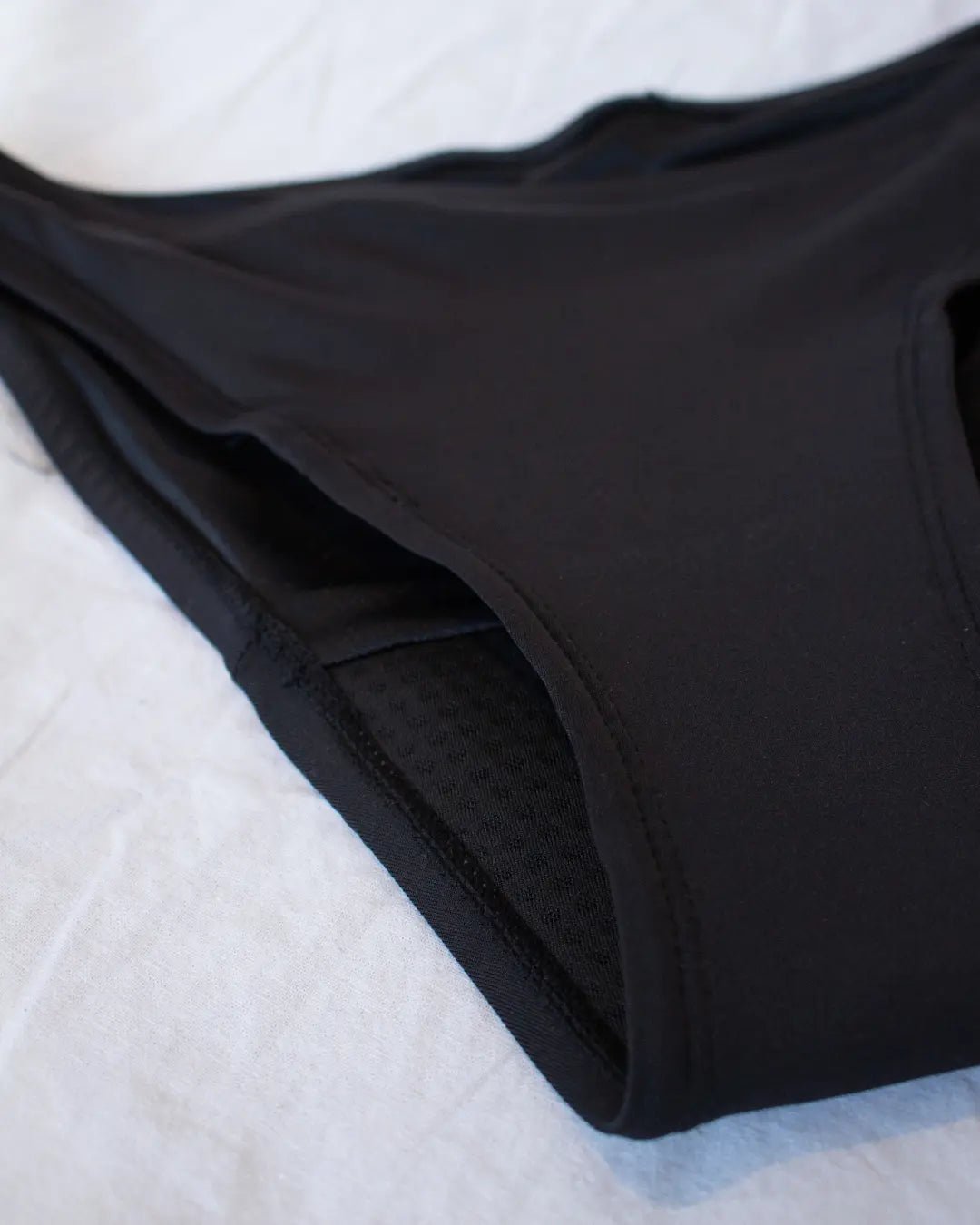
One-piece period swimwear offers the most comprehensive coverage and security. The continuous fabric structure prevents shifting, making it the ideal choice for lap swimming, water polo, or any activity where you need maximum confidence. Many swimmers prefer this cut because it stays in place regardless of how much you kick or turn.
Bikini and high-waisted bottoms provide versatility for casual swimming. These styles work well for beach days, pool lounging, or light play. While they offer good protection for moderate flow, the separate top and bottom pieces require careful fitting to ensure the absorbent lining stays aligned with your body during movement.
Period swimwear shorts are a practical hybrid option. They combine the coverage of bike shorts with leak-proof technology, offering a secure fit that many find more comfortable than traditional bikini bottoms. This cut is excellent for those who prefer extra coverage on the hips or want a sporty look that transitions easily from water to land.
| Cut | Coverage | Best For | Leak Confidence |
|---|---|---|---|
| One-Piece | Full | Lap swimming, water sports | High |
| Bikini | Moderate | Beach days, lounging | Moderate |
| Shorts | High | Active play, comfort | High |
Test the fit before your trip
Period swimwear relies on layered, absorbent technology to lock in flow, but the fabric behaves differently under tension than it does on a hanger. Trying on your chosen suit at home with your preferred menstrual cup or pad is the only way to verify that the internal lining sits flush against your body. This practice reveals potential gaps, bunching, or shifting that could compromise the waterproof barrier during movement.
Follow this sequence to ensure your period swimwear performs when you need it most:
Place your menstrual cup, disc, or pad inside the suit exactly as you would on your travel day. Period swimwear is designed to work in tandem with these products, not replace them entirely for moderate to heavy flows. Ensuring the backup product sits correctly prevents it from shifting out of the absorbent zone.
Pull the suit up and adjust the leg openings. The fabric should sit snugly against your skin without rolling down or creating a visible gap between the leg hole and your thigh. If you can easily slide a finger under the edge, the suit may be too loose to contain flow during swimming.
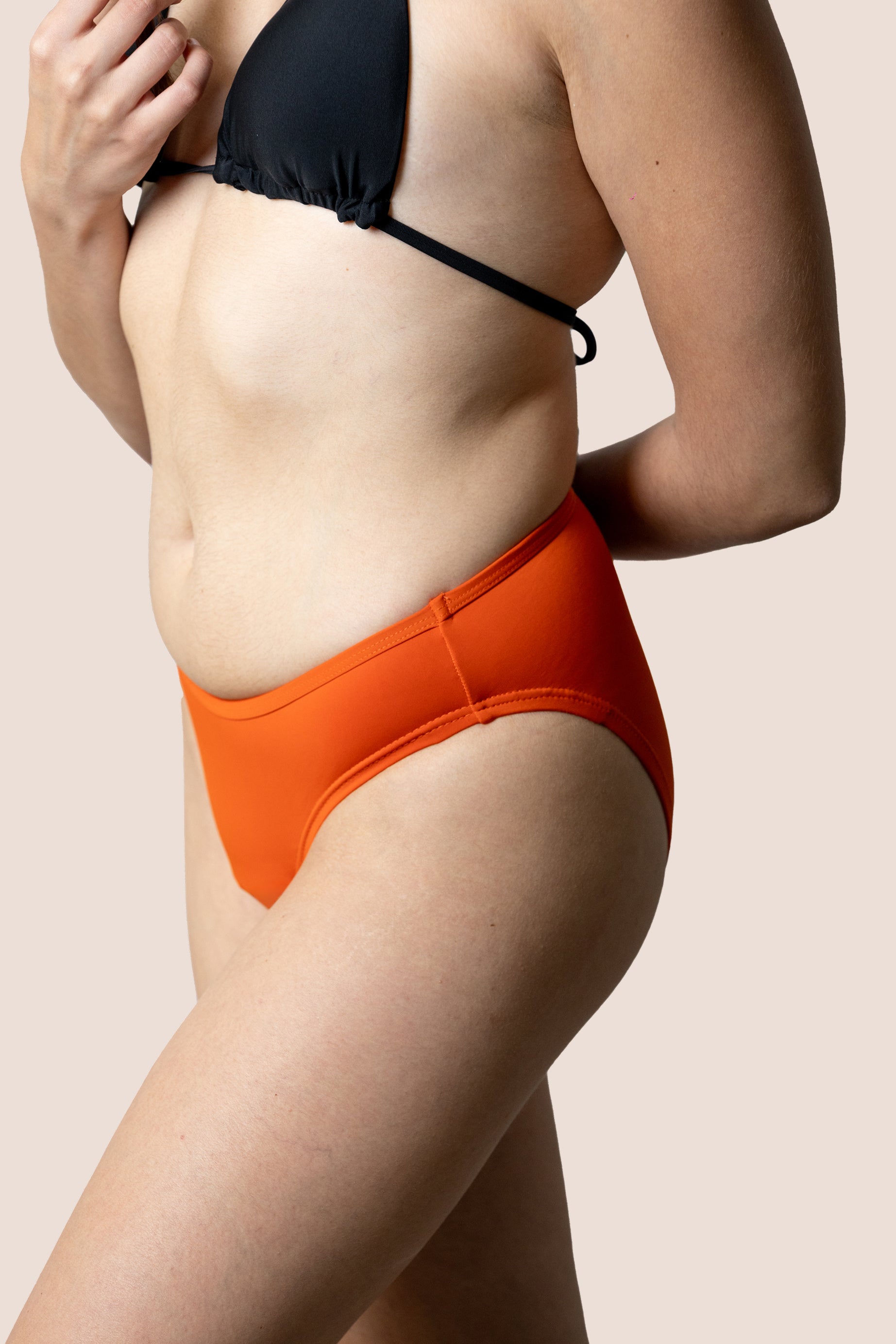
Perform deep squats, lunges, and high-knee jumps. These motions mimic the physical stress of entering a pool or splashing in the ocean. Watch for the suit riding up or the lining shifting away from your body. If the suit moves significantly, it may expose skin or create channels for leaks.
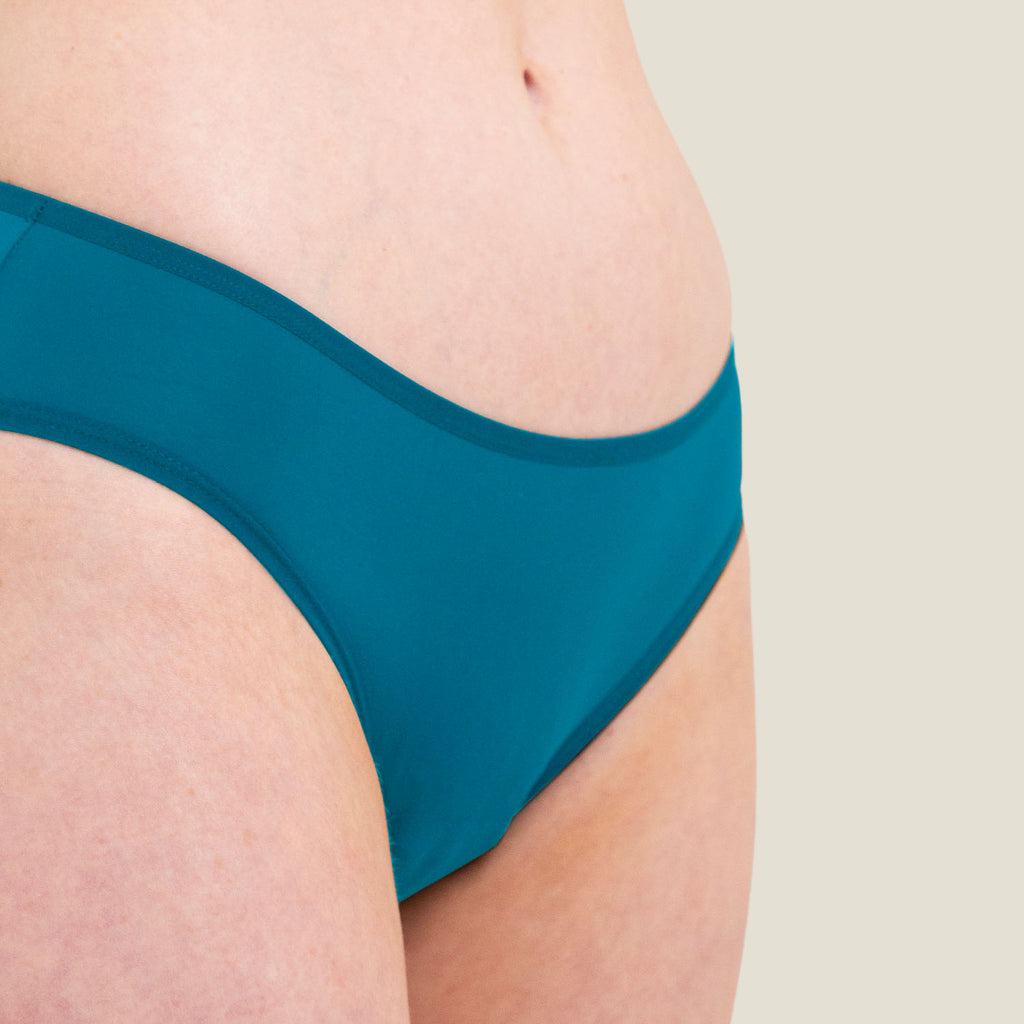
Look in a mirror to ensure the absorbent panel remains centered and flat against your pelvic area. The lining should not bunch, fold, or twist. Any wrinkles in the fabric can disrupt the absorption process and create weak points where fluid might escape.
A suit that feels comfortable standing still might fail when wet and moving. Taking twenty minutes to test the fit at home prevents the anxiety of a potential leak while you are away. If the suit does not pass these checks, exchange it for a different size or style before you pack.
Layer with backup protection
Period swimwear is engineered to handle light to moderate flow, but heavy days require a different strategy. Think of your swimsuit as a safety net, not a bucket. For maximum security, layer period swimwear with an internal backup like a menstrual cup or a disposable pad.
This combination ensures that even if the swimwear’s absorbent layers reach capacity, the backup catches the rest. Good Housekeeping notes that the best period swimwear can prevent leaks even during heavy flow, provided you use it as part of a layered system rather than relying on it alone.
If you prefer external protection, you can wear a tampon or menstrual cup underneath your period swimwear. This is a common and effective approach for those with heavier flows who want the confidence of two barriers. The swimwear then acts as a secondary shield against potential leaks or accidents.
Checklist for packing
-
Period swimwear (primary layer)
-
Menstrual cup or tampon (internal backup)
-
Spare period swimwear (for mid-day changes)
-
Wet bag for soiled items
-
Disposal bags for used backups
Care for period swimwear properly
Proper washing and drying are the main factors that determine how long your period swimwear stays leak-free. The absorbent core and waterproof layers are sensitive to heat and harsh chemicals. If you treat the fabric roughly, you risk clogging the absorbent fibers or degrading the waterproof membrane, which leads to leaks during your next swim.
Rinse your period swimwear in cold water as soon as possible after use. Salt, chlorine, and blood can damage the specialized fabrics if left to dry on the suit. Gently squeeze out excess water without wringing or twisting, which can misalign the internal layers. If you need a deeper clean, hand wash with a mild, non-biological detergent. Avoid fabric softeners, bleach, and stain removers, as these coat the fibers and reduce absorbency.
Air dry your period swimwear flat or hanging in a shaded area. Never put period swimwear in a tumble dryer. The high heat from dryers is the fastest way to ruin the waterproof backing and shrink the fabric. While the suit is drying, you can check the care label for any brand-specific instructions, but cold air drying is the universal rule for maintaining performance.
Common questions about period swimwear
Many people are curious about the mechanics behind period swimwear. Here are the answers to the most frequent questions.
No comments yet. Be the first to share your thoughts!