
Your Cycle After Thirty: A New Baseline
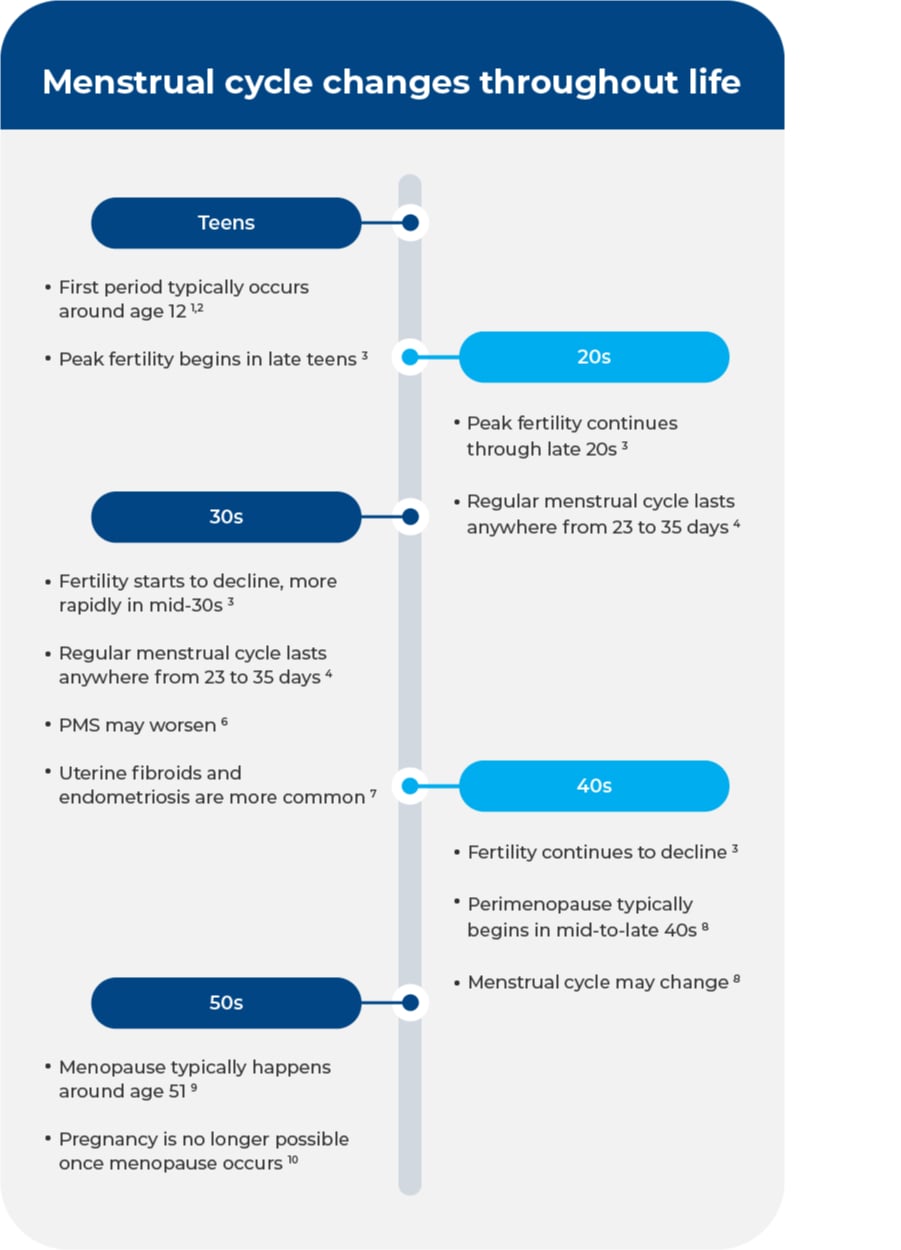
As you move into your thirties, you might notice changes in your period. A once-predictable cycle could become erratic, your flow might shift, or PMS symptoms could feel different. It's natural to feel anxious when your body changes. At Periuod, we aim to empower you with clear, evidence-based information about your menstrual health.
Changes to your cycle are normal. Your body constantly evolves, and your menstrual cycle reflects that. It's less about a decline and more about a shift in hormonal patterns. Recent research is helping us understand these changes with greater nuance.
For years, the narrative around periods and aging has focused on decline. But what if it's about recalibrating, understanding a new baseline, and adapting to a different rhythm? That's the perspective we'll take, grounding our discussion in the latest understanding of hormonal shifts.
Understanding hormonal shifts is the first step to feeling confident and in control. It allows you to advocate for your health, make informed decisions about your wellbeing, and navigate these changes with greater ease. We'll break down the key hormonal changes you can expect and how they might manifest in your cycle.
Progesterone's Subtle Shift
A consistent hormonal change after 30 is a gradual decline in progesterone production. Progesterone maintains the uterine lining during the luteal phase – the period between ovulation and your next period. As progesterone levels decrease, the luteal phase can shorten.
A shorter luteal phase can present in a few ways. You might experience spotting before your period, have shorter cycles overall, or find that your PMS symptoms are more intense. The National Institutes of Health's Endotext details the complex control of ovulation and the menstrual cycle, emphasizing progesterone's role in maintaining a healthy cycle.
This isn’t always a cause for concern. A slightly shorter luteal phase doesn’t necessarily indicate a problem. However, if it’s accompanied by other symptoms like difficulty getting pregnant or very heavy bleeding, discuss it with your doctor. Recognize the change and understand what it means for your body.
The decline in progesterone isn’t a sudden drop, but a gradual shift. Effects may be subtle at first, becoming more noticeable over time. Paying attention to your body and tracking your cycle helps you identify these changes early on.
- Spotting before your period
- Shorter menstrual cycles
- More intense PMS symptoms
Estrogen's Fluctuations: More Than Just Decline
Estrogen doesn't simply decline with age; that's a common misconception. While overall estrogen levels eventually decrease as you approach menopause, the story is more complex. In your 30s and 40s, estrogen levels can become more variable, with pronounced peaks and dips throughout your cycle.
This variability can contribute to irregular cycles, where your period might come earlier or later than expected. It can also lead to changes in your flow – heavier or lighter bleeding than usual. Mood swings are another common symptom, as estrogen fluctuations impact neurotransmitters in the brain.
Beyond cycle changes, fluctuating estrogen can affect physical comfort. Many women experience vaginal dryness and a decrease in libido as estrogen levels shift. These changes are often subtle at first, becoming more noticeable over time. Experiences vary widely; some women notice significant changes, while others experience very little.
Estrogen isn’t just about a steady decline; it’s about a dynamic shift, with periods of higher and lower levels. Understanding this variability helps interpret changes in your cycle and overall wellbeing.
Muscle Growth and Cycle Hormones
A recent study from the Sealy Center on Aging at UTMB offers a surprising insight into the relationship between menstrual cycle hormone shifts and muscle growth. Researchers found that short-term muscle growth isn’t significantly affected by these hormonal fluctuations.
The study tracked muscle protein synthesis in women throughout their menstrual cycles. While hormone levels varied predictably, the rate of muscle growth remained consistent. This challenges the belief that women’s training should be heavily modified based on where they are in their cycle for optimal gains.
The study measured muscle protein synthesis rates using stable isotope tracers, providing a precise measure of muscle building. This finding is encouraging for women who exercise, but it doesn’t negate other cycle-related physical changes, such as fluid retention or fatigue.
This research offers a more nuanced perspective on the impact of hormones on physical performance. It’s a reminder that the relationship between our cycles and our bodies is complex, and that generalizations can be misleading. It’s one piece of the puzzle, and doesn't mean you should ignore how you feel at different points in your cycle.
What About Perimenopause? Recognizing Early Signs
Differentiate between the normal cycle changes experienced in your 30s and the onset of perimenopause. Perimenopause is the transitional period leading up to menopause, typically beginning in your 40s. However, some women may experience early signs in their late 30s.
Early signs of perimenopause can be subtle and easily dismissed as "normal" cycle variations. Common symptoms include irregular periods (longer or shorter cycles, skipped periods), hot flashes, sleep disturbances, and mood swings. These symptoms can be unpredictable and fluctuate in intensity.
It’s easy to attribute these changes to stress or lifestyle factors, but be aware of the possibility of early perimenopause. If you’re experiencing several of these symptoms, and they’re significantly impacting your quality of life, discuss it with your healthcare provider.
Periuod offers resources on perimenopause and menopause, including articles, guides, and a supportive community. Find more information and support on our website.
- Irregular periods
- Hot flashes
- Sleep disturbances
- Mood swings
Could It Be Perimenopause? A Check-In on Your Cycle
As you move through your 30s, changes in your menstrual cycle can be common, and often linked to fluctuating hormone levels. Recent research, including studies from 2026, is shedding more light on these shifts. This quick quiz can help you assess if your experiences might indicate the early stages of perimenopause. Please remember this is *not* a diagnosis, and consulting a healthcare professional is crucial for personalized advice.
Period Product Adjustments: What Works Now?
Changes in your flow and cycle length may necessitate adjustments to the period products you use. If your flow has become heavier, switch to a more absorbent pad or tampon. If your cycles are more irregular, period underwear offers peace of mind.
Period underwear is a great option for managing unpredictable flows and providing backup protection. Menstrual cups are another popular choice, offering a sustainable and cost-effective alternative to disposable products. However, they do have a learning curve, and it may take some practice to find the right fit and insertion technique.
At Periuod, we offer a range of period products designed to meet your evolving needs. From absorbent period underwear to comfortable menstrual cups and reliable pads, we have something for everyone. We believe in providing options that empower you to manage your period with confidence.
Don’t be afraid to experiment with different products to find what works best for you. It’s a process of trial and error, and what worked in your 20s might not be the best option in your 30s.
Tracking & Talking: Taking Control
Tracking your cycle is one of the most valuable things you can do to understand your body and identify changes. Whether you prefer a period tracking app, a paper calendar, or basal body temperature charting, finding a method that works for you is key.
Period tracking apps allow you to log your symptoms, flow, and cycle length, providing valuable insights into your patterns. Basal body temperature charting can help you identify ovulation, while cervical mucus monitoring can provide additional clues about your fertility window.
Perhaps even more important than tracking is talking about your period. Normalize conversations with your friends, family, and healthcare provider. Sharing your experiences and seeking support can help you feel less alone and more empowered.
Periuod is committed to building a community where women can openly discuss their menstrual health. We offer forums and resources to connect you with others and provide a safe space for sharing and learning. Don’t hesitate to reach out – we’re here to support you.
Choosing a Tracking Method: A Comparative Overview
| Method | Ease of Use | Accuracy | Cost | Time Commitment |
|---|---|---|---|---|
| Period Tracking Apps | Easy | Moderate | Often Free - Premium Options Available | Low |
| Basal Body Temperature (BBT) Charting | Moderate | High (when properly interpreted) | Low (thermometer cost) | High |
| Cervical Mucus Monitoring | Moderate | Moderate to High (requires practice) | Low | Moderate |
| Calendar Method | Easy | Low | None | Low |
| Symptom Tracking (mood, bloating, etc.) | Easy | Subjective, supports pattern recognition | None | Low to Moderate |
| Wearable Devices (some models) | Easy | Variable, dependent on device and algorithm | Moderate to High | Low |
Illustrative comparison based on the article research brief. Verify current pricing, limits, and product details in the official docs before relying on it.
Nutrition & Lifestyle: Supporting Hormonal Balance
Nutrition and lifestyle factors play a significant role in supporting hormonal health. Focusing on a balanced diet rich in healthy fats, protein, and fiber can provide the building blocks your body needs to produce hormones.
Foods like avocados, nuts, seeds, and fatty fish are excellent sources of healthy fats. Protein helps regulate blood sugar levels and supports hormone production. Fiber promotes gut health, which is essential for hormone balance.
Stress management, adequate sleep, and regular exercise are also crucial. Chronic stress can disrupt hormone production, while lack of sleep can exacerbate hormonal imbalances. Regular exercise can help regulate your cycle and improve your overall wellbeing.
Remember that individual needs vary. What works for one person may not work for another. Pay attention to your body and make adjustments based on your own experiences. These are general principles, not strict rules.


No comments yet. Be the first to share your thoughts!