
Beyond Pads: A 2026 Check-In
Remember when your period options felt… limited? Pads, tampons, maybe a plastic applicator? It wasn't that long ago that conversations about menstruation were hushed, and choices were few. Now, in 2026, the period care aisle looks radically different, and that’s a good thing. We’re seeing a real shift, a move away from shame and towards empowerment and personalization.
This change is driven by a growing demand for sustainable and body-positive options. People are increasingly aware of the environmental impact of disposable products and are actively seeking alternatives. We've moved past simply tolerating our periods to actively seeking ways to manage them more comfortably, healthily, and responsibly.
Menstrual cups and period underwear have become frontrunners in this revolution. They represent a significant departure from traditional methods, offering reusable, eco-friendly, and often more comfortable solutions. But with so many choices, it can be overwhelming to figure out what’s right for you. Marketing has changed too—it’s less about hiding periods and more about finding products that fit seamlessly into our lives.
This guide is here to help. We'll break down the pros and cons of menstrual cups and period underwear, offering a clear, honest comparison to help you make an informed decision. We’ll look at everything from cost and sustainability to comfort and convenience, so you can find the sustainable period product that truly fits your lifestyle.
Menstrual Cups: The Deep Dive
Menstrual cups are small, flexible cups typically made from medical-grade silicone. They’re inserted into the vaginal canal to collect menstrual fluid, rather than absorbing it like a tampon. This is a fundamental difference that impacts everything from comfort to capacity. The idea might seem strange at first, but many people find them surprisingly comfortable once they get the hang of it.
The way they work is fairly straightforward. Once inserted correctly, the cup creates a seal against the vaginal walls, preventing leaks. The fluid collects inside the cup, and you empty it every 8-12 hours, depending on your flow. After emptying, you rinse the cup with water and reinsert it. Proper cleaning is key – most cups can be sterilized by boiling them between cycles.
You’ll find cups made from two main materials: silicone and TPE (thermoplastic elastomer). Silicone is generally considered the more durable and hypoallergenic option. Cups also come in different shapes and sizes, designed to accommodate varying cervical heights, flow levels, and whether or not someone has given birth vaginally. Finding the right fit is essential for comfort and leak prevention.
Insertion and removal definitely take practice. There’s a learning curve, and it’s not uncommon to experience some initial discomfort or difficulty. The 'pinch' method and the 'C-fold' are two popular folding techniques used to make insertion easier. Once inserted, you shouldn't feel the cup, but it takes time to get used to the sensation. Saalt, for example, claims their cups can be worn for up to 12 hours and last for up to 10 years, which is a significant benefit.
It’s important to be realistic about the learning process. Don’t get discouraged if it doesn’t click right away. Watch videos, read reviews, and be patient with yourself. Some people find that it takes a few cycles to master insertion and removal. If you're consistently experiencing discomfort, it might be a sign that you need a different size or shape of cup.
Period Underwear: Comfort & Convenience
Period underwear is exactly what it sounds like: underwear with built-in absorbent technology. It's designed to be worn just like regular underwear, offering a comfortable and convenient alternative to pads and tampons. This option feels very familiar, which is a big draw for many people.
The absorbent layers are typically made from materials like cotton, modal, or bamboo, combined with a waterproof layer to prevent leaks. Different styles offer different levels of absorbency, ranging from 'light' for spotting or backup to 'super' for heavy flow. "Light’ absorbency is good for a little extra security, while ‘regular’ is comparable to a light tampon. ‘Heavy’ and ‘super" can handle a full flow, potentially replacing tampons or pads altogether.
Comfort is a major selling point for period underwear. The materials are often breathable and soft, making them much more comfortable than traditional disposable products. Styles vary widely, too—you can find everything from bikini cuts to high-waisted briefs. Proper care is crucial for maintaining absorbency and preventing odor. Most brands recommend rinsing the underwear in cold water before washing them on a gentle cycle.
Speaking of odor, this is a common concern. High-quality period underwear is designed to minimize odor, but it’s still important to change them regularly, especially during heavy flow. And while leakage is relatively rare with properly fitted underwear, it's always a possibility, particularly during intense activity or with very heavy flows. Choosing a darker color can provide extra peace of mind.
The availability of styles is a huge plus. Whether you prefer a classic bikini, a supportive boyshort, or a high-waisted brief, you’re likely to find period underwear that suits your preferences. This allows you to feel comfortable and confident during your period, without sacrificing your personal style.
Leakage Protection: A Head-to-Head
Let's be real: leakage is a major concern for anyone considering a new period product. With menstrual cups, the risk of leakage is generally low once you’ve mastered insertion. However, improper placement or a cup that’s the wrong size can lead to leaks. A good seal is essential, and it takes practice to achieve that consistently.
With period underwear, leakage risk depends on the absorbency level and how well the underwear fits. Choosing the right absorbency for your flow is crucial. Underwear that’s too small or too loose may not provide adequate protection. Activity level also plays a role—high-impact exercise can increase the risk of leaks with both products.
Here’s a quick comparison in a few scenarios: for light flow, a well-fitted cup or light absorbency underwear should be sufficient. For medium flow, a properly inserted cup or regular absorbency underwear is usually reliable. For heavy flow, a larger cup or heavy/super absorbency underwear is recommended. It’s also smart to have backup options available.
Many people choose to use a pantyliner with a menstrual cup as an extra layer of protection, especially during the initial learning phase. With period underwear, wearing darker underwear can offer peace of mind. It’s also important to remember that everyone’s flow varies, so it’s helpful to experiment and find what works best for you.
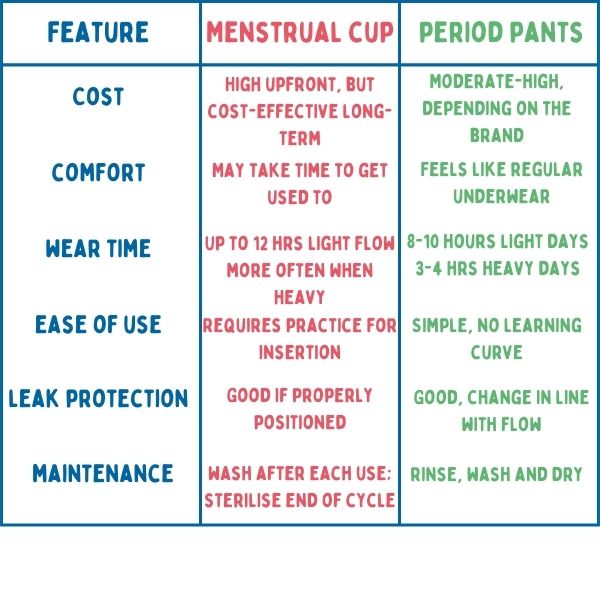
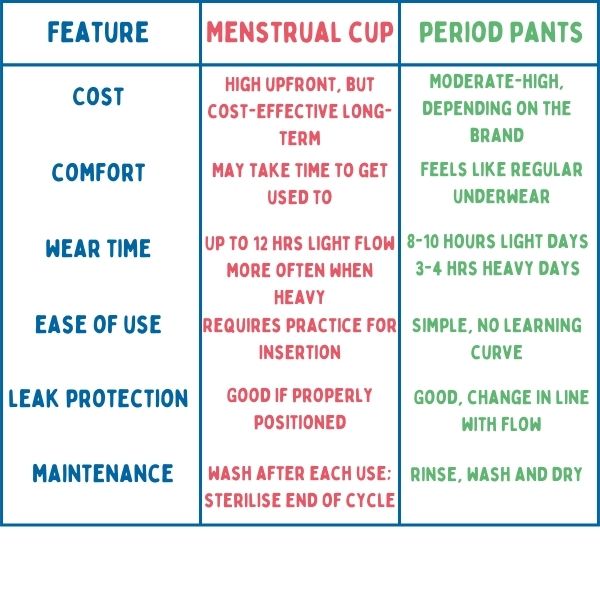
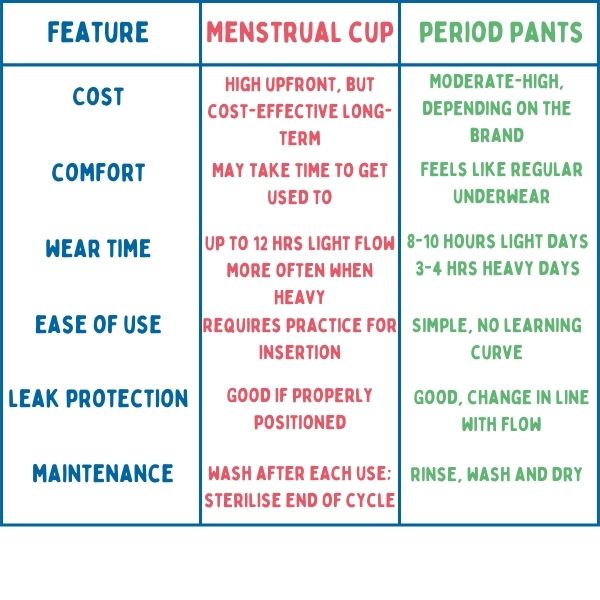
Menstrual Cup vs. Period Underwear: A Comparative Overview (2026)
| Feature | Menstrual Cup | Period Underwear |
|---|---|---|
| Leakage Risk | Low (when properly fitted and inserted) | Medium to Low (dependent on absorbency and fit) |
| Comfort | Medium to High (after initial learning curve) | High |
| Ease of Use | Moderate (requires practice with insertion and removal) | Easy |
| Initial Cost | Medium (cost of the cup itself) | Medium to High (dependent on quantity purchased) |
| Long-Term Cost | Low (cups can last up to 10 years with proper care) | Medium (requires ongoing repurchase) |
| Environmental Impact | Low (reusable, reduces landfill waste) | Low to Medium (depending on materials and manufacturing processes) |
| Suitability - Light Flow | Suitable | Suitable - Light to Moderate absorbency options available |
| Suitability - Regular Flow | Suitable | Suitable - Moderate to Heavy absorbency options available |
Illustrative comparison based on the article research brief. Verify current pricing, limits, and product details in the official docs before relying on it.
Cost Breakdown: Long-Term Savings?
The initial cost of a menstrual cup typically ranges from $20 to $40, while a good quality pair of period underwear can cost anywhere from $20 to $40 per pair. That initial investment for underwear can add up quickly. However, that’s where the long-term savings come in.
A single menstrual cup can last for up to 10 years with proper care, eliminating the need to purchase disposable products month after month. A set of 3-5 pairs of period underwear will likely cover you through your entire cycle. While the underwear will eventually wear out, they’ll generally last for at least a year or two.
Compared to the ongoing cost of pads and tampons (which can easily exceed $100 per year), both menstrual cups and period underwear offer significant long-term savings. The exact amount will depend on your flow, your brand preferences, and how often you replace your products, but the potential for savings is substantial.
Keep in mind that you may need to replace a menstrual cup less frequently than period underwear. While a cup can last a decade, underwear will eventually lose its elasticity and absorbency. Factor in the cost of replacement when calculating your long-term expenses.
Sustainability: Which Is Greener?
Disposable period products generate a massive amount of waste. Pads and tampons, along with their applicators and packaging, end up in landfills, contributing to environmental pollution. Switching to a reusable option is a significant step towards a more sustainable period.
Menstrual cups have a lower environmental footprint than disposable products, but they’re not entirely without impact. The production of silicone requires energy and resources. However, the long lifespan of a cup significantly reduces its overall environmental impact. Concerns have been raised about microplastic shedding from silicone cups, but more research is needed to fully understand this issue.
Period underwear also offers a more sustainable alternative to disposables. The production of fabrics like cotton and modal does have an environmental impact, but the reusable nature of the underwear offsets this to some extent. The water usage associated with washing period underwear is a factor to consider. Washing in cold water and air drying can help minimize water consumption.
Proper disposal is key for both products. While menstrual cups can last for years, they will eventually need to be replaced. Check with your local waste management facilities to see if they accept silicone recycling. Period underwear can often be recycled or repurposed as cleaning rags once it’s worn out.
Lifestyle Fit: Finding Your Match
So, which product is right for you? The answer depends on your individual lifestyle and preferences. If you’re an active person who enjoys swimming, hiking, or other high-impact activities, a menstrual cup might be a good choice. They’re secure and reliable, and you don’t have to worry about leakage during strenuous exercise.
If you prioritize comfort and convenience, period underwear could be a better fit. They feel just like regular underwear, and you don’t have to worry about insertion or removal. They’re also a great option for people who are new to reusable period products.
Travelers might appreciate the convenience of menstrual cups, as they eliminate the need to pack a supply of disposable products. Period underwear is also travel-friendly, but you’ll need to pack enough pairs to last your entire trip. If you are someone who is hesitant about internal products, period underwear is a great starting point.
For teens who are just starting their periods, period underwear can be a less intimidating option. It allows them to experience a more comfortable and body-positive period without the learning curve of a cup. For people experiencing menopause who may have unpredictable flow, both options can be helpful, but period underwear offers more flexibility.
Don’t be afraid to experiment! You might find that you prefer to use a combination of both products, depending on your flow and activity level. The most important thing is to find a solution that feels comfortable, convenient, and sustainable for you.
Which Sustainable Period Product Is Right For You?
Choosing a sustainable period product can feel overwhelming! Menstrual cups and period underwear are both fantastic options, but the best choice depends on your lifestyle and preferences. This quick quiz will help you navigate the options and find the perfect fit for you.
Amazon Standouts: Cups & Underwear
Amazon offers a wide selection of both menstrual cups and period underwear. Here are a few top-rated options to get you started. Please note that prices and availability can vary.
Saalt Cup: (Approx. $35) Consistently praised for its comfort and leak prevention. Made from medical-grade silicone and available in multiple sizes. Customers rave about its long wear time and ease of use.
Flex Cup: (Approx. $30) Features a patented pull-tab for easy removal. Designed for comfort and leak-free protection. A good option for beginners.
Thinx Period Underwear: (Approx. $35/pair) A well-known brand offering a variety of styles and absorbency levels. Made from breathable and comfortable materials. Popular for its sleek design and reliable protection.
Knix Period Underwear: (Approx. $30/pair) Offers a range of underwear options with varying absorbency levels. Made from seamless and comfortable materials. Known for its leakproof technology.
Aisle Period Underwear: (Approx. $25/pair) An eco-friendly option made from organic cotton. Offers a comfortable and sustainable alternative to disposable products.
Featured Products

Medical-grade silicone menstrual cup · Includes Diva Wash for cleaning · Model 1 suitable for medium to heavy flow
This combo pack provides a reliable menstrual cup and the necessary cleaner for a complete sustainable period care routine.

Soft, flexible medical-grade silicone · Leak-free protection for up to 12 hours · BPA and latex-free
The saalt Soft cup offers comfortable, long-lasting protection and is made from body-safe materials, making it a great option for extended wear.

Medical-grade silicone menstrual cup · Designed for wider vaginal canals, post-partum, and ages 35+ · Offers up to 12 hours of continuous wear
Model 2 of the DIVA Cup is specifically designed for individuals with different anatomical needs, ensuring comfortable and effective period management.
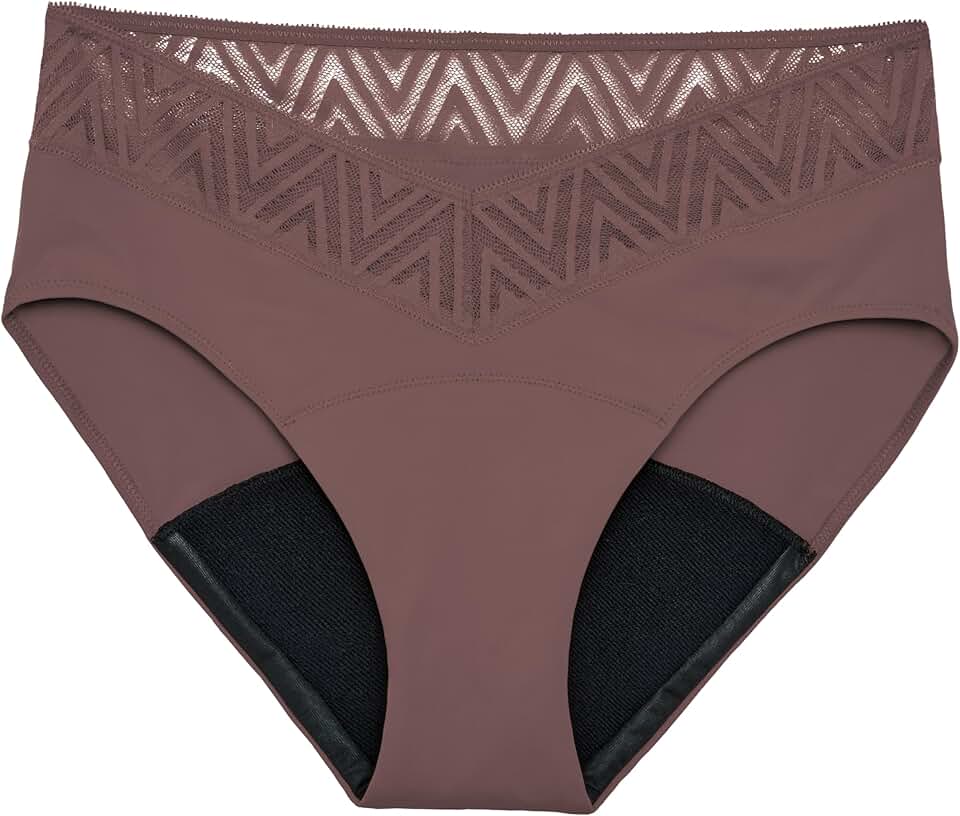
Comfort-stretch hip hugger style · Absorbent technology holds up to the equivalent of 12 regular tampons · Reusable and sustainable period solution
THINX Hip Huggers provide a comfortable and discreet way to manage heavy flow periods with their high absorbency and familiar underwear design.

3-pack of bikini-style period underwear · Made with breathable cotton · Leakproof design for reliable protection
This 3-pack of INNERSY period underwear offers an affordable and comfortable cotton option with leakproof technology for everyday period protection.
As an Amazon Associate I earn from qualifying purchases. Prices may vary.
No comments yet. Be the first to share your thoughts!